Client: FDOT District 2
Location:Jacksonville, FL
Services: Roadway and roundabout design | Sidewalk design | Minor drainage | Traffic control plans | Signing and pavement marking | Lighting | Signalization | Bridge load rating | Survey
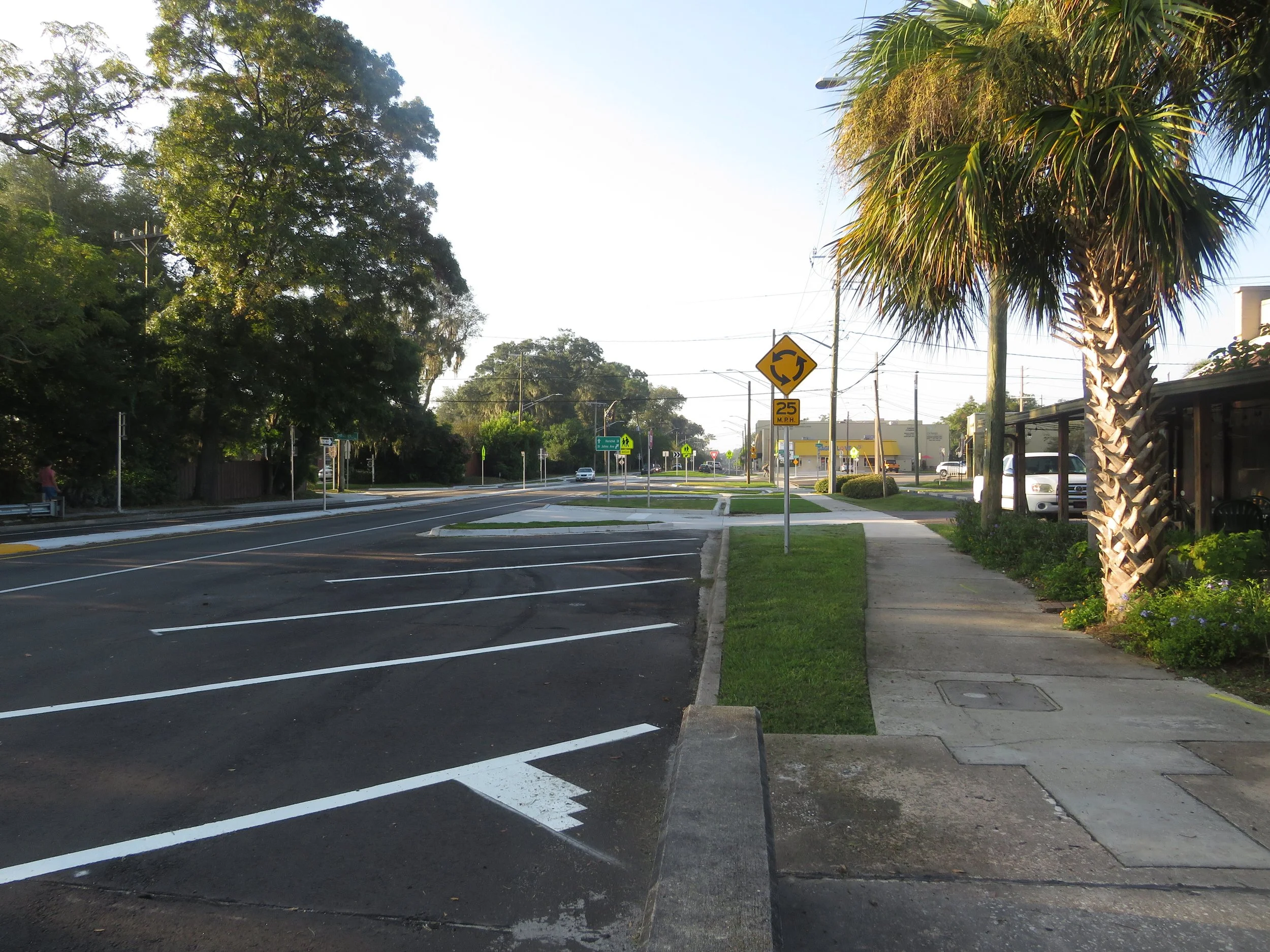
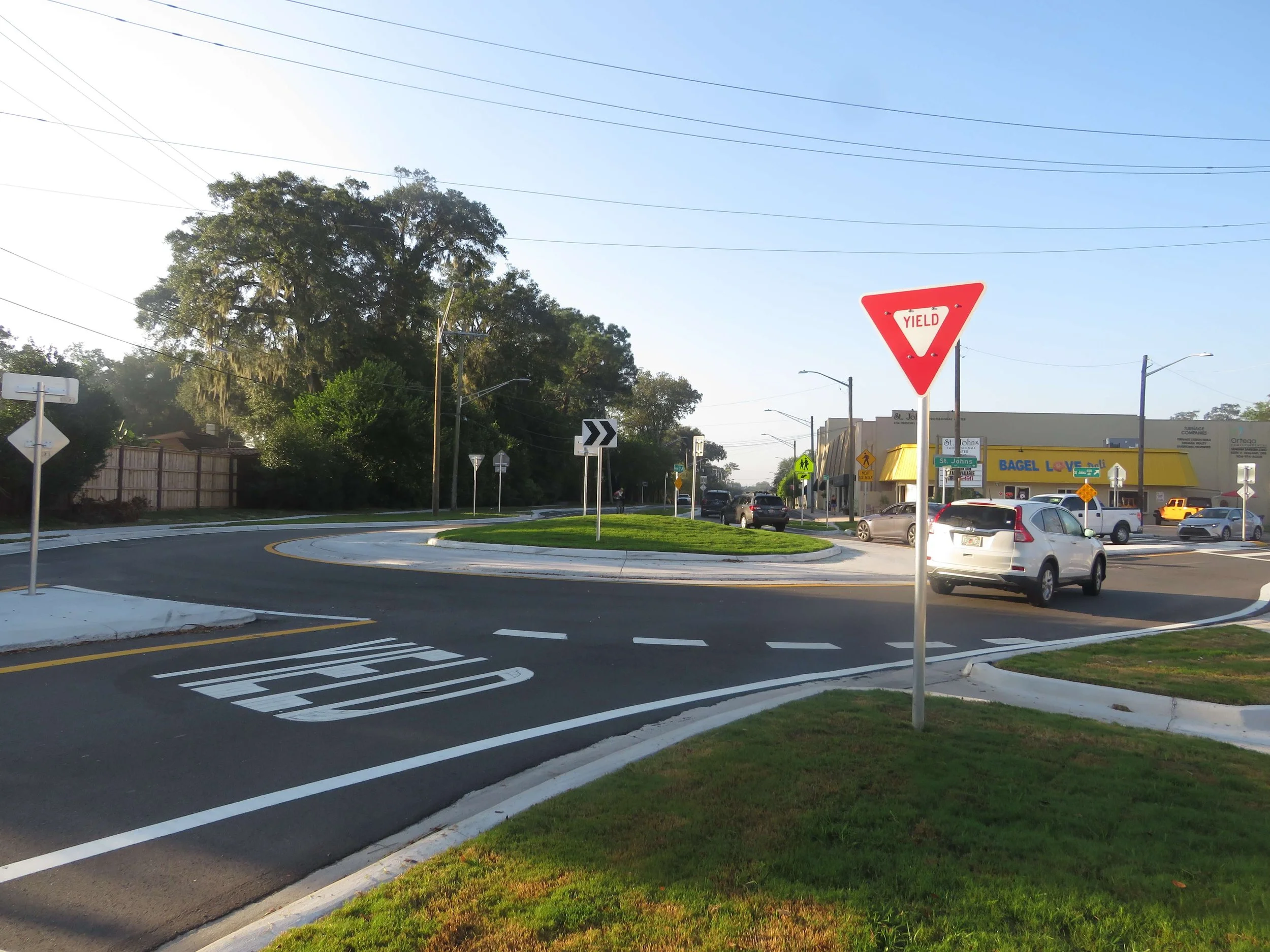
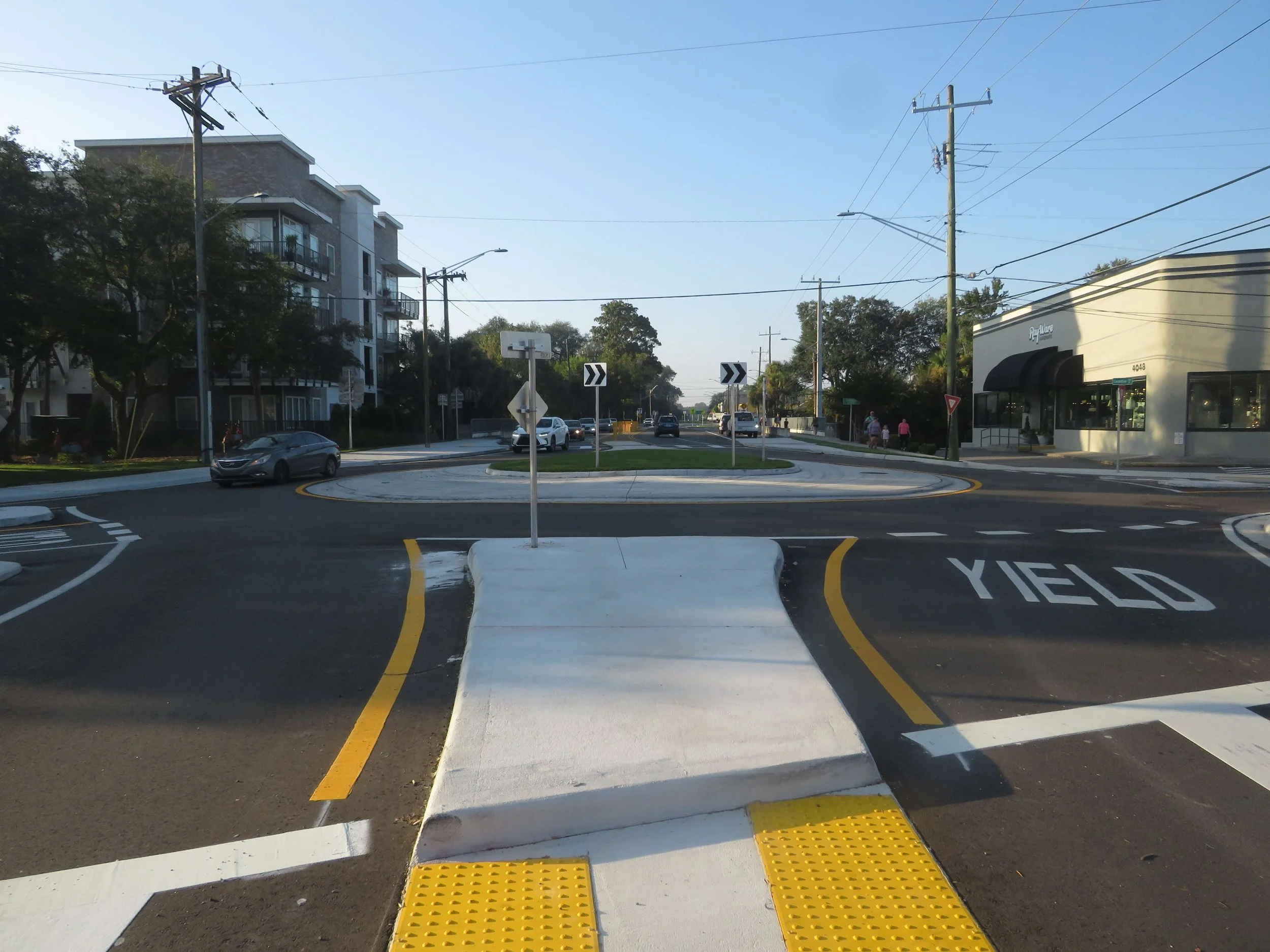
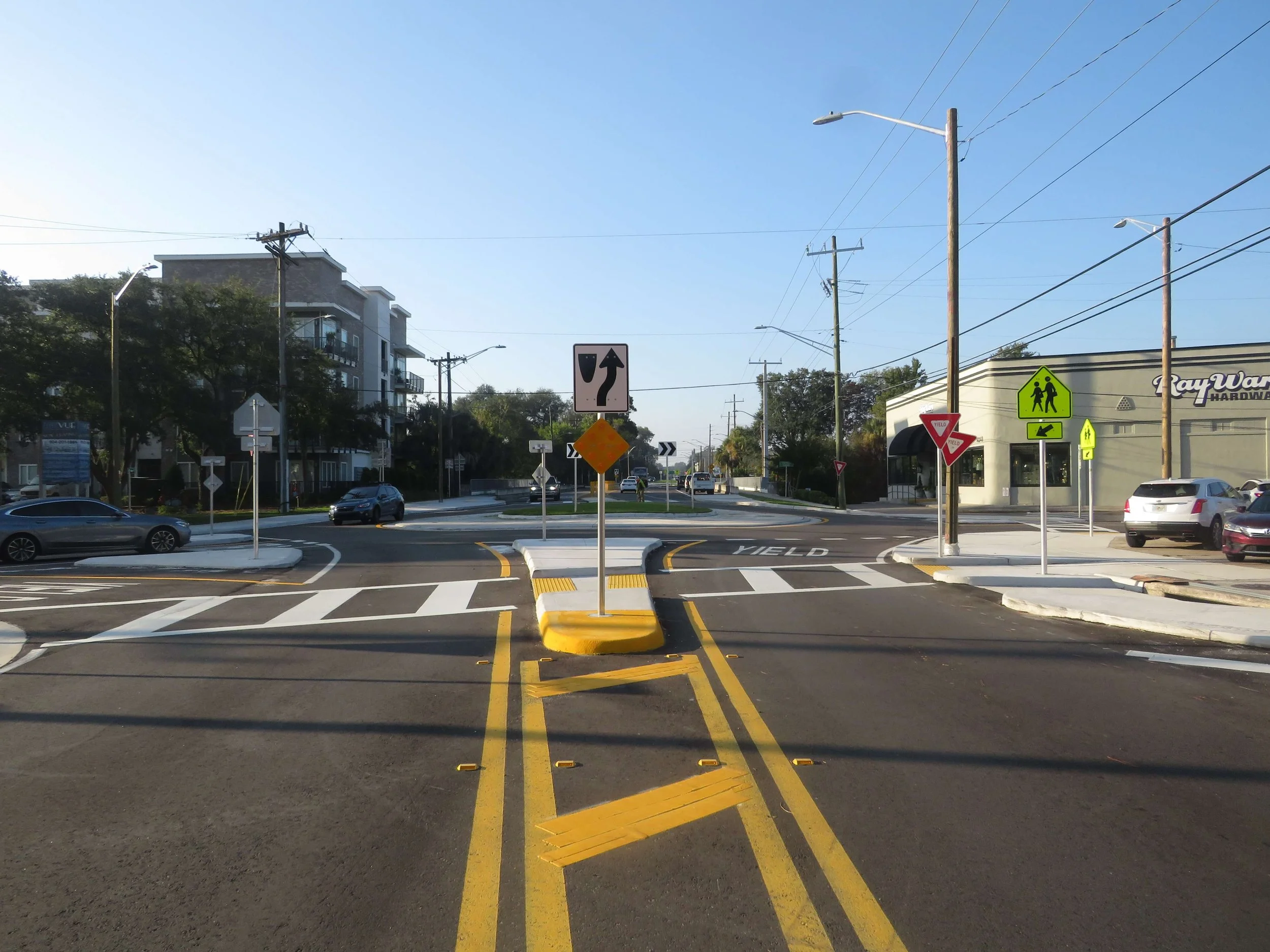
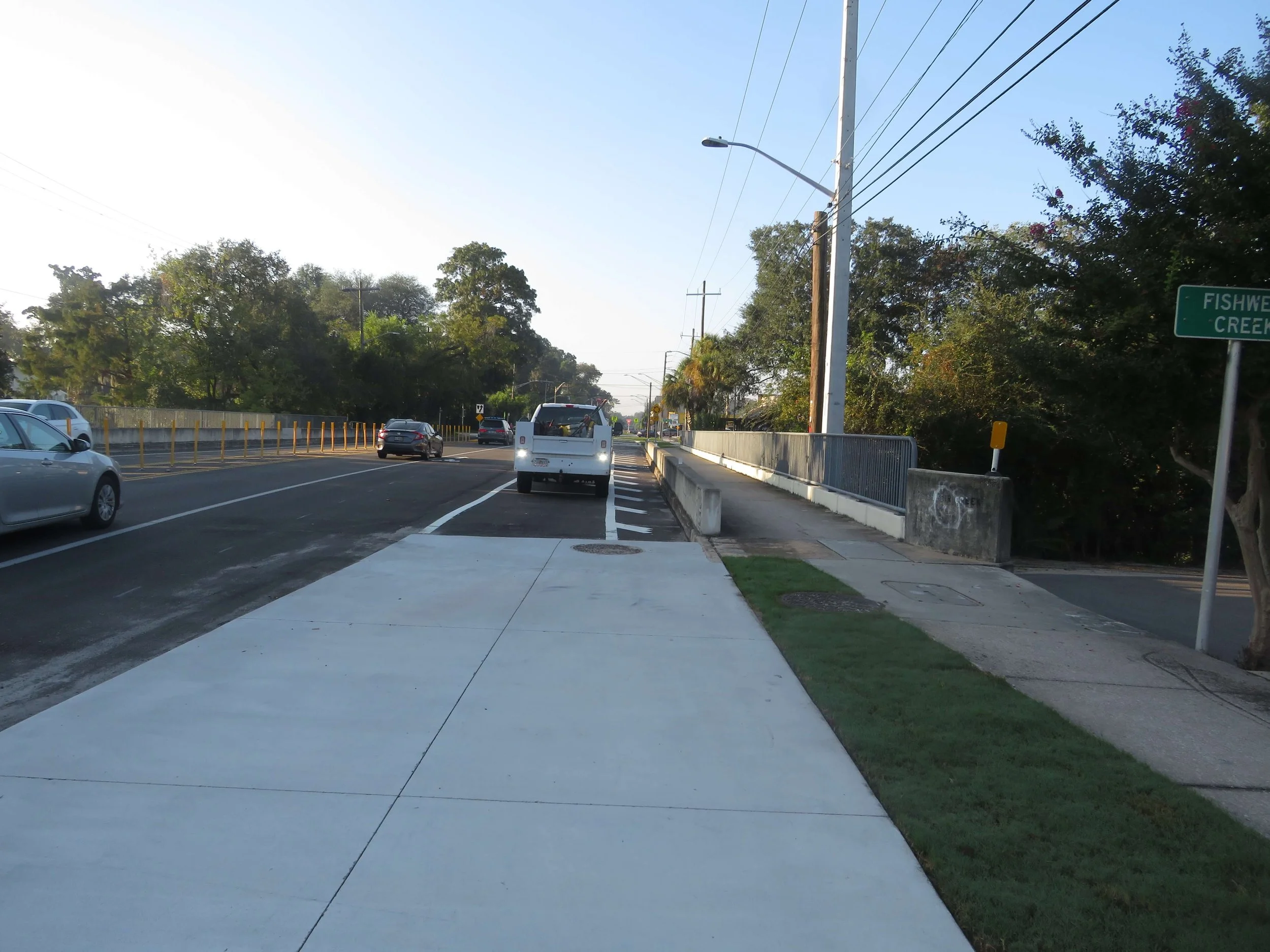
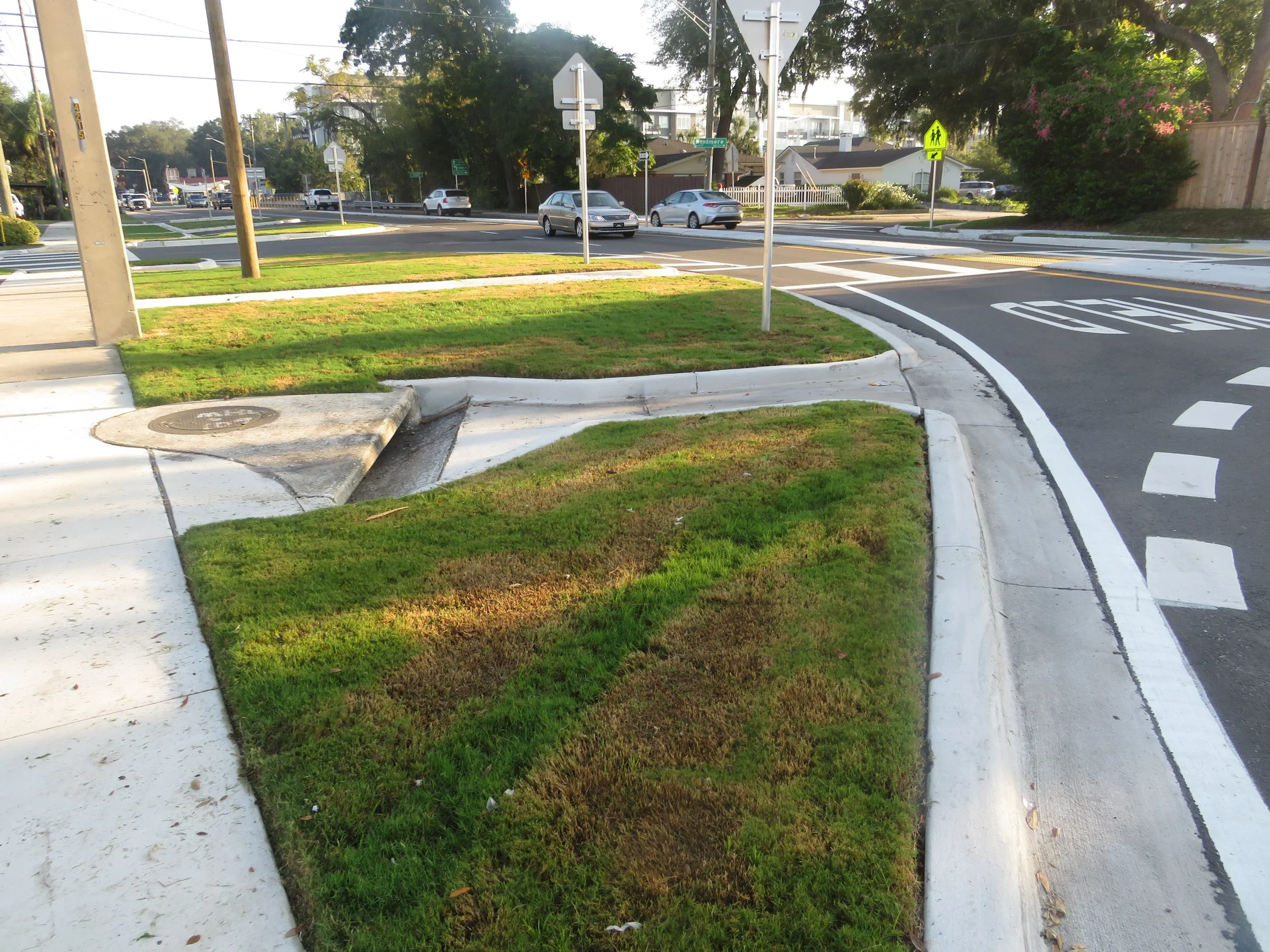
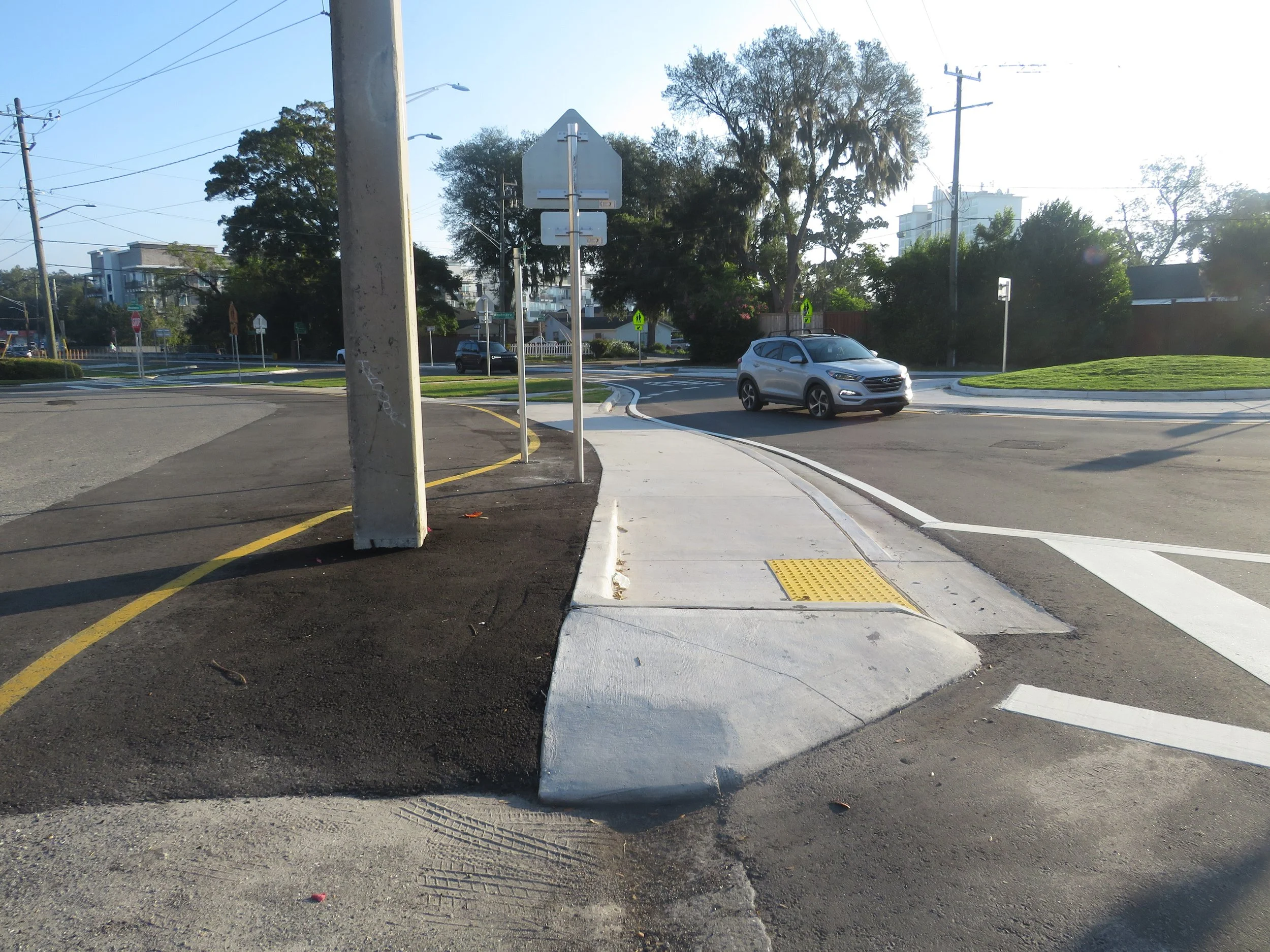
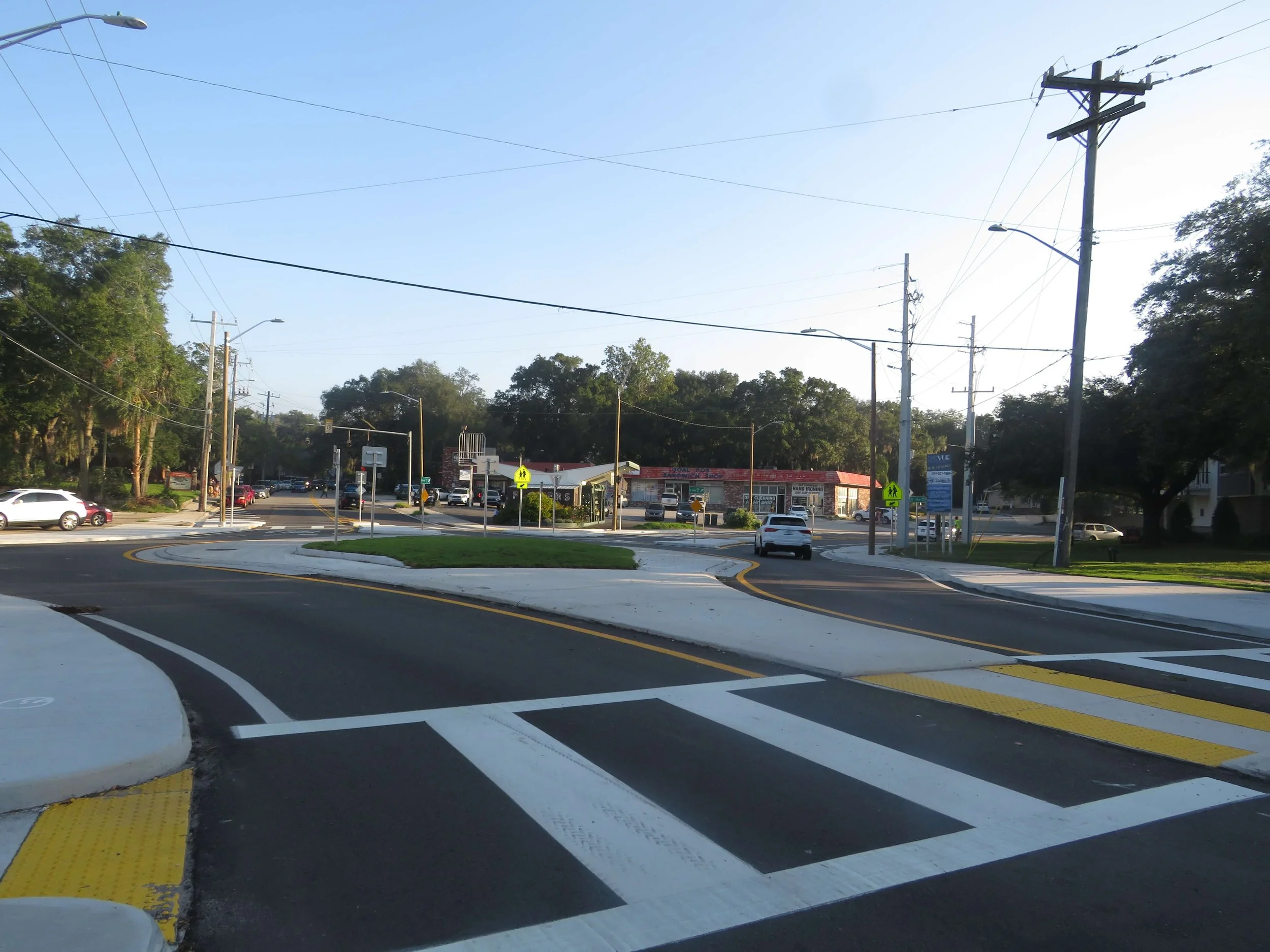
This project delivered complete pavement rehabilitation and intersection modernization along St. Johns Avenue from Canterbury Street to Herschel Street in Jacksonville, Florida, including the conversion of two signalized intersections into modern roundabouts. Work was performed within a densely populated historic residential and commercial corridor, requiring exceptional coordination, community engagement, and innovative engineering solutions.
Design services included topographic survey, roadway and roundabout design, sidewalk design, minor drainage improvements, maintenance of traffic (MOT) planning, signing and pavement marking, roadway lighting, traffic signalization, and bridge load rating.
Project Complexity & Maintenance of Traffic Challenges
The primary complexities centered on maintenance of traffic (MOT), restricted construction work hours, and continuous public coordination in an active historic neighborhood. The project required the removal of two existing signalized intersections and installation of two modern roundabouts within a high-density area of Jacksonville featuring residential properties, local businesses, restaurants, antique shops, a hardware store, a jeweler, a florist, an elementary school, and multiple churches.
Key traffic and construction challenges included:
Roundabout median island and truck apron construction while maintaining live vehicle and pedestrian access throughout the project corridor
Nighttime noise mitigation for adjacent residents during off-hours milling and paving operations
Oversized vehicle turning radius constraints — trucks 40 feet and longer could not navigate the intersections without mounting the truck aprons, requiring real-time constructability solutions and field-coordinated MOT adjustments
Uninterrupted access to residences, restaurants, and businesses throughout all construction phases
Quality outcomes
The project was completed with zero asphalt straight-edge deficiencies, no material exceptions, and no findings upon final post-audit estimate review — a benchmark result for a project of this complexity.
Innovative Engineering & Technical Solutions
The project team — including FDOT, the general contractor, and specialty material manufacturers — collaborated on several forward-thinking solutions to address durability, accelerated construction timelines, and long-term pavement performance:
Enhanced Patterned Brick Pavement Durability: To address the high frequency of truck apron mounting at the roundabouts, engineers introduced diatomaceous earth as an epoxy additive to increase viscosity, achieving a 20% thicker patterned pavement brick surface — significantly improving wear resistance and long-term durability under heavy vehicle loads.
Accelerated Concrete Strength for Rapid Traffic Return: To meet the requirement of opening truck aprons to traffic within 72 hours, the project specified 5,500 PSI high-early-strength concrete for all curbs and mountable apron areas (target: 2,200 PSI minimum at opening). Concrete pours were strategically scheduled on Fridays, with early break testing performed to confirm strength and reopen to traffic by Monday morning — minimizing weekend disruption to the surrounding community.
Expanded Community Amenities Within Project Footprint: FDOT leveraged the project to deliver added public value, including 26 new on-street parking spaces, a new sidewalk segment constructed within existing asphalt pavement, and a design philosophy prioritizing green space over hardscape — incorporating grass into roundabout islands wherever feasible rather than defaulting to 100% concrete.
Community Impact Minimization & Stakeholder Coordination
Recognizing the project's location within a vibrant historic Jacksonville neighborhood, FDOT and the contractor implemented an extensive community-first approach to reduce construction impacts:
No-cost suspension days were mutually agreed upon to accommodate neighborhood events, holidays, and high-traffic business periods
Delayed project start was implemented to avoid disrupting the Christmas holiday shopping season for local businesses
When motorists failed to follow signed detours — creating safety and access issues for residents — FDOT proactively increased law enforcement presence along the detour route and launched targeted resident communication efforts to keep the community informed of upcoming traffic changes
Ongoing outreach ensured transparent, continuous communication with homeowners, business owners, school administrators, and church leaders throughout construction
Design services provided
Roadway & Roundabout Design along SR 212 / St. Johns Avenue
Drainage & Minor Drainage Design
Sidewalk Design for improved pedestrian connectivity
Milling and Resurfacing from Canterbury Street to Herschel Street
Maintenance of Traffic (MOT) planning and design
Signing and Pavement Marking design
Traffic Signalization design and optimization
Roadway Lighting design
Bridge Load Rating
Survey services
Utility Relocation & Coordination
Construction Cost Estimating
Public Meetings & Community Engagement
Technical Specifications development